Hair Types Used in Hair Replacement
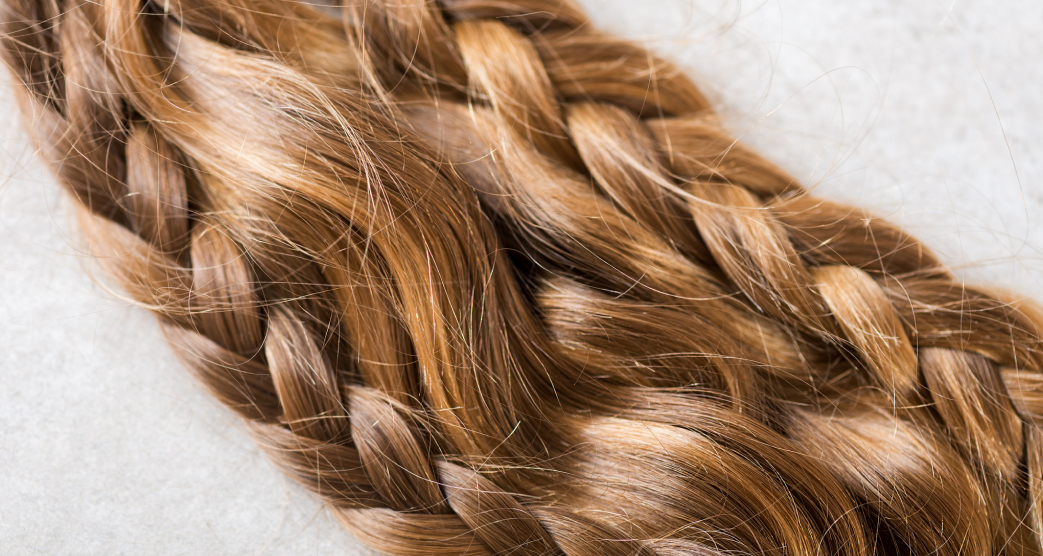
The hair used in wigs, hair systems, hairpieces and toppers can be made from human hair, synthetic fibers or a combination of different fibers. Each can produce an excellent cosmetic result when the quality, texture, color and intended use are appropriate.
Consumers are often encouraged to judge hair by labels such as Remy, virgin, raw, European, Russian, Brazilian or premium. These terms do not all mean the same thing, and many are used inconsistently throughout the hair replacement industry.
Hair origin alone also does not determine quality. Processing, cuticle condition, sorting, coloring, bleaching, texture, manufacturing and how the finished hair is cared for can matter as much as where the hair originally came from.
Human Hair
Human hair is highly valued for its natural movement and styling flexibility. It can generally be cut, curled and straightened much like naturally growing hair, and color work may also be possible depending on how the hair has already been processed.
Consumers should not assume that a finished wig or hairpiece can safely be lightened, colored or chemically treated again simply because it is human hair. Many products have already undergone significant processing before they reach the consumer.
Most human hair used commercially in hair replacement moves through large international supply chains. Significant quantities are sourced and processed through Asia, particularly India and China. A finished wig may be manufactured in one country using hair collected or processed somewhere else, so the country where the wig was made does not necessarily identify where the hair itself originated.
Human hair quality varies enormously. A product labeled “100 percent human hair” can still differ dramatically in softness, tangling, longevity, color stability and overall performance.
What Is Remy Hair?
Remy hair generally refers to human hair that has been kept in consistent root to tip orientation so the cuticles remain aligned in the same direction.
Keeping the cuticles aligned can reduce friction and tangling and help the hair move more naturally.
Remy does not automatically mean virgin, unprocessed, European or superior quality. Remy hair can still be bleached, colored, texturized or otherwise chemically processed before it becomes part of a finished hairpiece.
Remy is a description of how the hair has been kept and oriented, not a certified quality grade. The term alone does not tell the consumer how heavily the hair has been processed or how carefully the finished product was manufactured.
Non Remy Hair
Non Remy hair generally refers to human hair in which the strands have not been maintained in consistent root to tip alignment.
Because opposing cuticles can create friction and tangling, non Remy hair may be chemically processed to reduce or remove the cuticle and then conditioned or coated to improve smoothness and manageability.
This does not mean every non Remy product is poor quality, but it can behave very differently from high quality cuticle aligned hair as it ages and is repeatedly washed.
What Does Virgin Hair Mean?
The term virgin hair is generally intended to describe human hair that has not previously been chemically colored, bleached, permed or otherwise chemically altered.
That is different from Remy. Hair can theoretically be both virgin and Remy, Remy but processed, or neither.
Consumers should still be cautious about treating the word virgin as a guarantee of quality. The hair replacement industry does not use every marketing term consistently, and finished performance depends on far more than a label.
What Is Raw Hair?
The term raw hair is commonly used to describe human hair sold close to its natural state, without chemical coloring, bleaching, texturizing or other major processing.
Raw and virgin are often used interchangeably in marketing, but they are not necessarily identical terms and there is no universal industry standard that defines either one with complete precision.
As with Remy and virgin hair, the word raw should not be treated as proof of quality by itself. Consumers should still ask how the hair was sourced, processed, sorted and manufactured.
European, Russian, Brazilian, Indian, and Other Hair Labels
Geographic names are among the most confusing terms in the human hair market.
Indian and Chinese hair are genuine major sources of human hair used throughout the international hair industry. Genuine European origin hair also exists and can command a premium, particularly when the hair is naturally lighter and requires less processing.
But terms such as Brazilian hair, Russian hair, Mongolian hair and European hair are also widely used as marketing or texture descriptions, and the name alone should not be assumed to prove where the hair was actually collected.
Even genuine geographic origin does not automatically determine quality. Hair from the same region can vary considerably in diameter, texture, color, processing history and overall condition.
Consumers purchasing expensive human hair should therefore ask more useful questions: Is the cuticle intact? Is the hair Remy? Has it been bleached or colored? How heavily has it been processed? Is the claimed origin actually known?
A geographic label is not a substitute for understanding the actual hair.
Sourcing and Traceability
The international human hair trade can involve collectors, brokers, processors, manufacturers, distributors and retailers before the finished product reaches the consumer.
If verified geographic origin or ethical sourcing is important to the buyer, labels such as “European,” “Brazilian” or “ethically sourced” should not automatically be accepted as proof.
Consumers paying a premium for sourcing claims should ask what traceability, documentation or supplier information supports those claims.
Processed Human Hair
Much of the human hair used in commercial hair replacement has been processed before the consumer ever sees it.
Naturally dark hair may require extensive lightening before it can become blonde, gray or another lighter shade. Hair may also be colored, texturized, straightened, conditioned or coated during manufacturing.
Processing is not automatically a sign of poor quality. It is often necessary to create the desired color and texture.
The important issue is how aggressively the hair has been processed and what condition it is in afterward. Heavily bleached or repeatedly processed hair can become dry, porous, fragile and more prone to tangling or breakage.
This is why two wigs described with exactly the same marketing terms can perform very differently over time.
Synthetic Hair
Modern synthetic fibers can produce remarkably realistic wigs and hairpieces and should not automatically be viewed as an inferior substitute for human hair.
Synthetic hair usually retains its manufactured color, curl and style with relatively little daily work. It is also generally less expensive than comparable human hair and can be particularly practical for consumers who want predictable styling.
Its limitations depend on the fiber. Traditional synthetic fibers can be damaged by temperatures routinely used on human hair and usually offer less freedom for permanent restyling or coloring.
Synthetic hair also wears differently from human hair and can eventually develop friction, frizzing or changes in texture, particularly in areas that repeatedly rub against clothing.
Heat Friendly Synthetic Hair
Some modern synthetic fibers are specifically manufactured to tolerate controlled heat styling.
This can provide greater styling flexibility than traditional synthetic hair, but heat friendly does not mean heat proof. Temperature limits vary by fiber and manufacturer, and excessive heat can permanently damage the hair.
Heat friendly synthetic fibers can also be more sensitive to friction and may require more detangling and maintenance, particularly around the nape and in areas that repeatedly rub against clothing.
Consumers should follow the temperature and care recommendations for the specific product rather than assuming a synthetic wig can be treated like human hair.
Human Hair and Synthetic Blends
Some wigs and hairpieces combine human hair with synthetic fiber.
Blends can offer a compromise between the movement and styling characteristics of human hair and the shape retention or lower cost of synthetic fiber.
The tradeoff is that the finished piece must be cared for according to its most heat sensitive component. A product containing human hair cannot automatically be treated like an all human hair piece if synthetic fibers are also present.
Consumers should know the actual fiber composition before coloring, chemically processing or applying heat.
Gray Hair and Other Fibers
Gray and white hair in wigs and hair systems can be created using human hair, synthetic fibers or, in some products, animal fibers.
Synthetic gray is commonly used because naturally white human hair is relatively limited and can be more expensive. At higher gray percentages, human gray hair may also be available.
Some manufacturers also offer yak hair as a white or gray fiber.
Yak hair should not be confused with Yaki hair. Yak hair is an animal fiber. Yaki is a texture designation used for hair made to resemble the appearance of straightened or relaxed textured hair.
Hair Grades such as 8A, 10A, and 12A
Consumers shopping online may encounter numerical grades such as 8A, 10A or 12A that are presented as indicators of hair quality.
There is no universal grading system that makes these labels directly comparable from one seller to another. One company’s 10A hair is not necessarily equivalent to another company’s 10A hair.
These grades should therefore be treated as seller specific marketing descriptions rather than standardized measurements of quality.
What Actually Determines Hair Quality?
There is no single word, country name or grade on a product label that tells a consumer whether the hair will be good.
For human hair, important variables include cuticle condition and alignment, processing history, hair diameter, texture, color treatment, sorting, consistency and manufacturing quality.
For synthetic hair, fiber quality, heat tolerance, texture, shine, friction resistance and manufacturing matter.
The way the hair is ventilated into the base, the density of the finished piece and the quality of customization also influence how natural the final product appears, even when excellent hair has been used.
Human hair is not automatically better than synthetic hair. Remy is not automatically superior simply because the word appears on a label. Virgin, raw and geographic names are not guarantees of quality, and numerical grades are not standardized across the industry.
The right hair is the hair that provides the appearance, texture, maintenance, durability and styling flexibility that make sense for the individual wearer.